
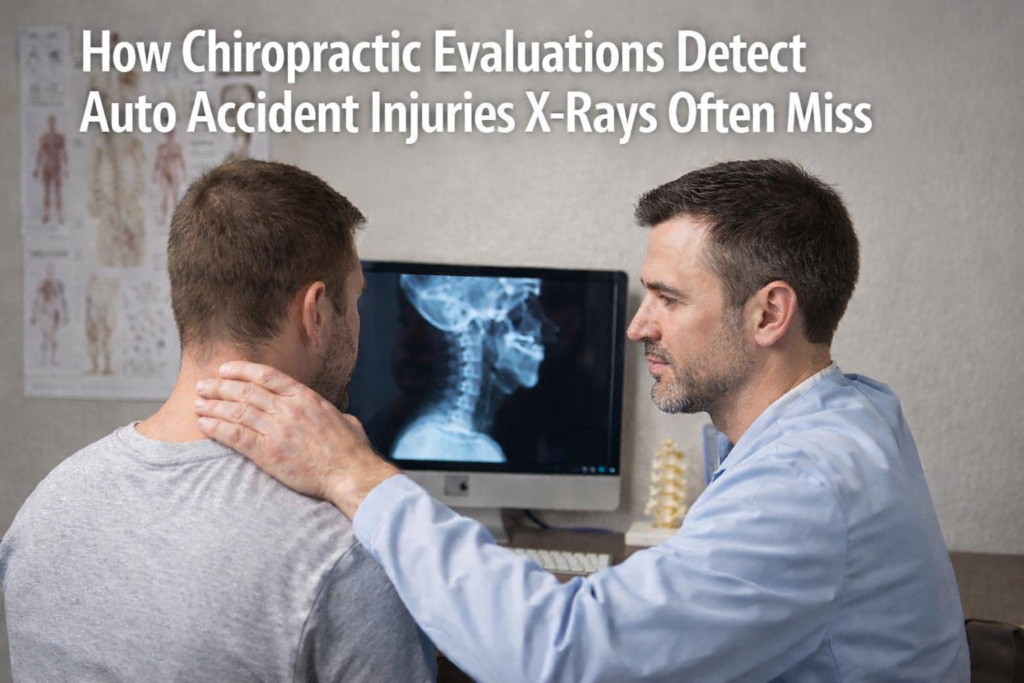
Pain after a car accident does not always add up right away. Scans can come back normal even when the body clearly feels off. Many people end up seeing an auto accident chiropractor in St. Johns, FL, once symptoms begin to show days later.
The chiropractors at Back in Motion look closely at how the spine moves and how the body responds after impact. Careful exams often reveal hidden injuries that basic imaging never picks up. Many accident injuries hide in soft tissue, joint movement, and nerve irritation.
Read on to see how chiropractic evaluations uncover injuries that X-rays often miss.
Key Takeaways
- Many auto accident injuries start in soft tissue and joint movement, which is why pain can appear days after a crash even when scans look normal.
- Hands-on exams can reveal hidden problems, such as ligament strain, muscle guarding, and nerve irritation, that imaging often misses.
- Small changes in spinal movement, posture, and balance can expose the real cause of lingering pain after a collision.
Ligaments That Became Too Loose
A sudden crash can stretch the strong bands that hold the spine steady. These bands, called ligaments, keep each spinal joint stable during everyday movement. Damage can leave a joint too loose, which often leads to strange movement and ongoing discomfort.
X-rays still show bones in the right place even when ligaments lose their strength. A chiropractor checks each joint with careful hands to see how the spine moves under gentle pressure. Extra motion during this exam can reveal ligament injuries that standard scans miss.
A Stuck Joint In The Neck
Neck pain after a crash can manifest in unexpected ways. Turning the head may suddenly feel tight or painful, even though nothing looks broken on a scan. A small joint in the neck can stop gliding properly after the impact.
Regular imaging often looks normal in these cases because the bones stay in place. Chiropractors look for trouble through careful movement testing during a physical exam. Each section of the neck is checked to find the exact joint causing the restriction.
Tiny Muscle Tears In The Neck
A violent snap of the head during a collision can strain neck muscles beyond their normal limits. Tiny tears often form deep inside the muscle fibers, which explains why pain can grow worse in the days after the accident.
Hidden Muscle Damage After Impact
Neck muscles act like stabilizing cables for the spine. Sudden force can overload these tissues, leading to small-fiber tears that disrupt normal support. Damage at this level can make even simple movements feel strained and unstable.
How Chiropractors Identify Muscle Fiber Injuries
Standard scans rarely detect damage inside muscle tissue. Skilled hands can detect tight bands, swelling, and areas that react with sharp tenderness during an exam. Auto accident chiropractors in St. Johns, FL often rely on these physical findings to pinpoint the true source of pain.
Why Early Evaluation Matters For Recovery
Untreated muscle tears can lead to long-term tension and limited movement. Persistent strain may spread stress to nearby joints and nerves over time. The team at Back in Motion evaluates these soft tissue injuries early so patients can begin the right care before the problem worsens.
Early Stress Inside A Spinal Disc
A sudden jolt during a crash can put heavy pressure on the soft discs that sit between the spinal bones. Pain may start deep in the back or neck, even when scans still appear normal. Early disc stress can make sitting, standing, or turning feel uncomfortable after the collision.
Careful movement tests help reveal how the spine reacts under gentle motion. Chiropractors watch when pain appears and which positions trigger it during the exam. These patterns often point to pressure building inside a disc before a larger injury forms.

Nerve Irritation Without A Visible Injury
Strange sensations after a crash can signal trouble with the nerves. Burning pain, tingling, or sudden weakness may appear even when scans show no clear injury. Nerve tissue reacts quickly to pressure or inflammation after a sudden impact.
Chiropractors check how nerves communicate with the body during a detailed exam. Reflex tests and muscle checks reveal whether signals travel through the nerves properly. Changes in these responses can uncover irritation that basic imaging often misses.
Changes In Natural Spinal Curves
A car crash can quietly shift the natural shape of the spine. These curves help the body absorb force during everyday movement. Even small changes can place uneven stress on joints, muscles, and nerves.
The body often adapts to these shifts in ways that reveal deeper problems:
- Posture imbalance: A slight change in spinal curve can tilt the body forward or to one side. This imbalance forces surrounding muscles to work harder just to keep the head and shoulders level.
- Uneven pressure through the spine: Altered curves change how weight moves through the spinal column. Certain joints begin carrying more load than they were designed to handle, which can lead to steady discomfort over time.
- Restricted movement patterns: A shifted curve can limit the smoothness of spine bending or rotation. Everyday actions such as turning the head or twisting the torso may begin to feel tight or strained.
- Hidden alignment clues during exams: Careful posture checks help reveal these subtle structural changes. Auto accident chiropractors in St. Johns, FL, look for alignment patterns that explain why pain continues even when scans appear normal.
Small curve changes often tell an important story about how the spine reacted to the crash.
Hidden Injuries Need A Closer Look From An Auto Accident Chiropractor In St. Johns, FL
Many injuries after a crash hide in muscles, ligaments, and joint movement, which is why pain can grow long after the accident. Careful chiropractic exams can uncover these problems before they turn into lasting damage. The team at Back in Motion helps patients identify hidden injuries and start the right path toward recovery.
Frequently Asked Questions
Can a car accident cause injuries even if the X-ray looks normal?
Yes. X-rays mainly show bone damage, but many crash injuries affect muscles, ligaments, discs, and nerves. These injuries can still cause serious pain and movement problems even when imaging looks normal.
What symptoms should I watch for after a car accident?
Stiffness, headaches, tingling, and reduced neck movement often appear hours or days after a crash. These symptoms can signal soft-tissue or joint injuries that require medical evaluation.
Why do some car accident injuries show up days later?
Inflammation often builds slowly after a collision. As swelling increases around injured tissues, pain and stiffness become easier to notice.
How do chiropractors check for hidden injuries after a crash?
Chiropractors examine how the spine moves and how muscles respond during certain motions. They also test nerve function to detect irritation or weakness linked to spinal trauma.
Can untreated soft tissue injuries lead to long term pain?
Yes, untreated soft-tissue injuries can form scar tissue and cause lasting stiffness. Early care can help restore movement and prevent chronic pain from developing.